Serving Pomona, CA and surrounding areas.(909) 326-7540
Pomona Concrete Pro

Upland Concrete Poured for Stony Alluvial Soils and Slopes

We pour driveways, hillside retaining walls, rear patios, and garage slabs shaped for rocky alluvial soil along Euclid Avenue. Call our team to arrange your written estimate on site.

Poured concrete driveway installation in an Upland property

Why Upland Concrete Demands Deep Base Compaction

Slabs poured in Upland must sit on mechanically compacted crushed aggregate to bridge the unyielding granite boulders and shifting sandy loam that form the foothill alluvial fan.

Data from the USDA Web Soil Survey reveals that Upland soils consist predominantly of coarse sandy loam embedded with heavy granitic outwash from the mountains. When water drains downhill toward the valley floor, loose fines migrate away while large cobbles stay rigid. Without a compacted crushed stone layer, slabs settle unevenly over buried rocks, causing tension cracks across driveways and patios within two seasons of pouring.

Working in this foothill terrain requires strict adherence to standards published by the Portland Cement Association regarding subgrade preparation and contraction joint spacing. Founder Hector Zamora brought 13 years of crew trade experience before opening Pomona Concrete Pro in 2020. Every pour includes steel reinforcement, clean subbase preparation, and a written workmanship guarantee against defects in how it was built so property owners have stable ground beneath their feet.

Concrete Flatwork Built for Upland Properties

Every project below addresses the coarse alluvial fan deposits and distinct foothill grades found across Upland neighborhoods, ensuring durable slabs that withstand local ground movement.

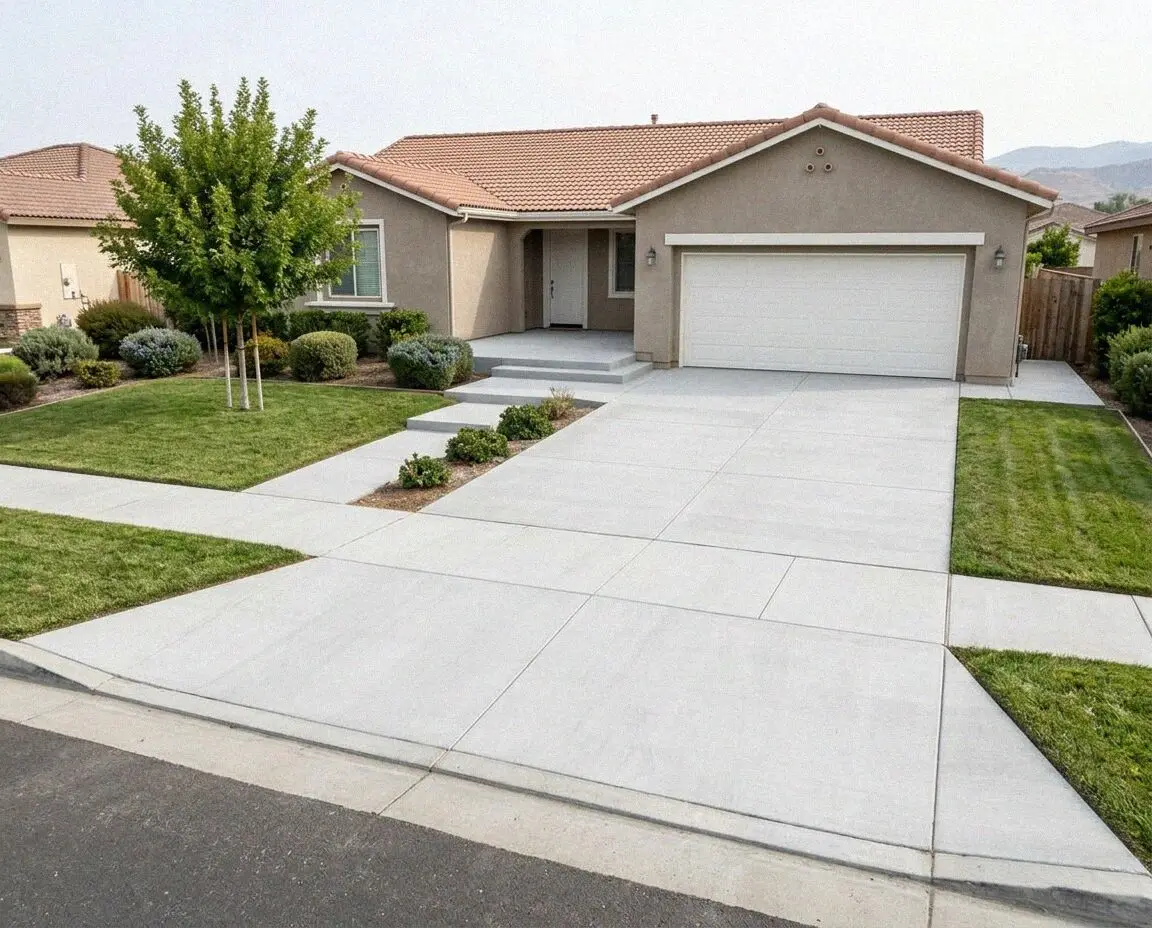
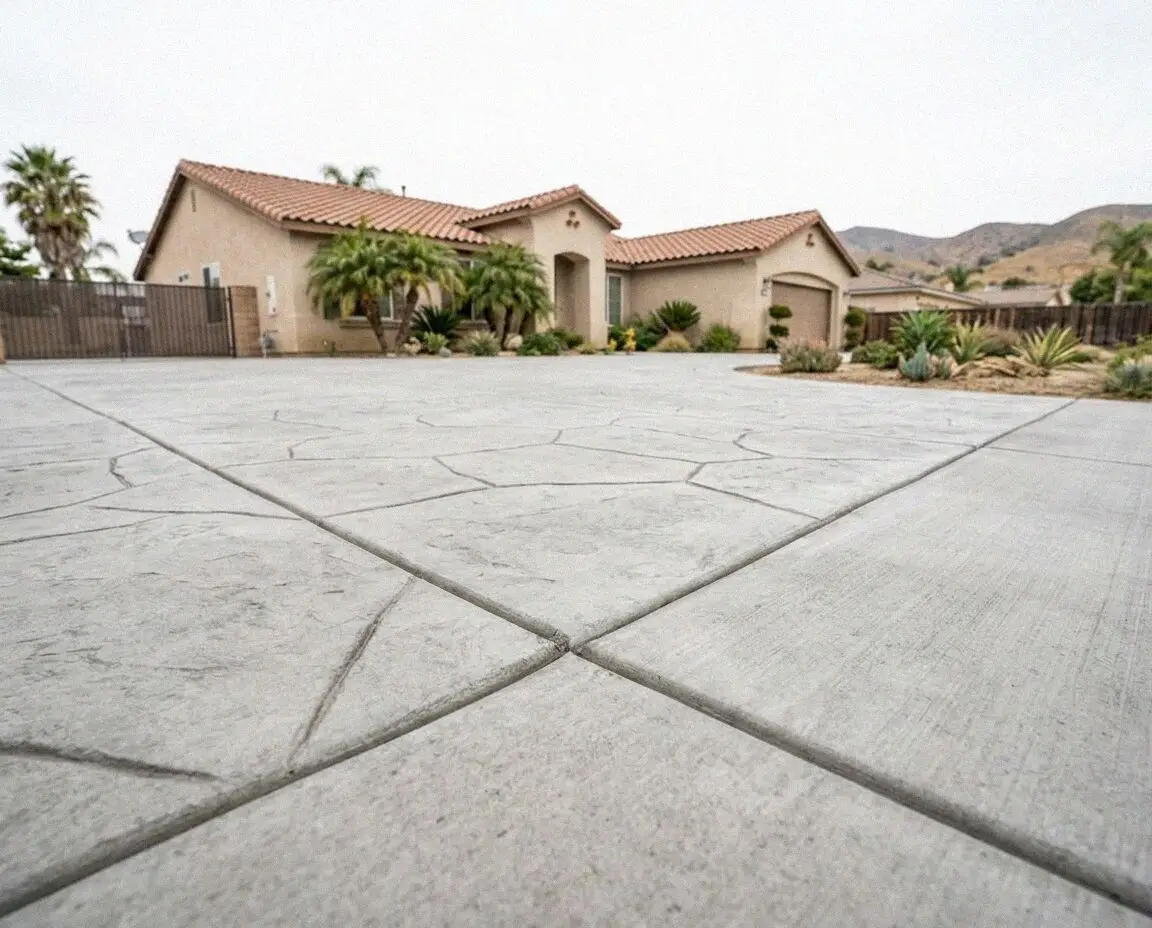
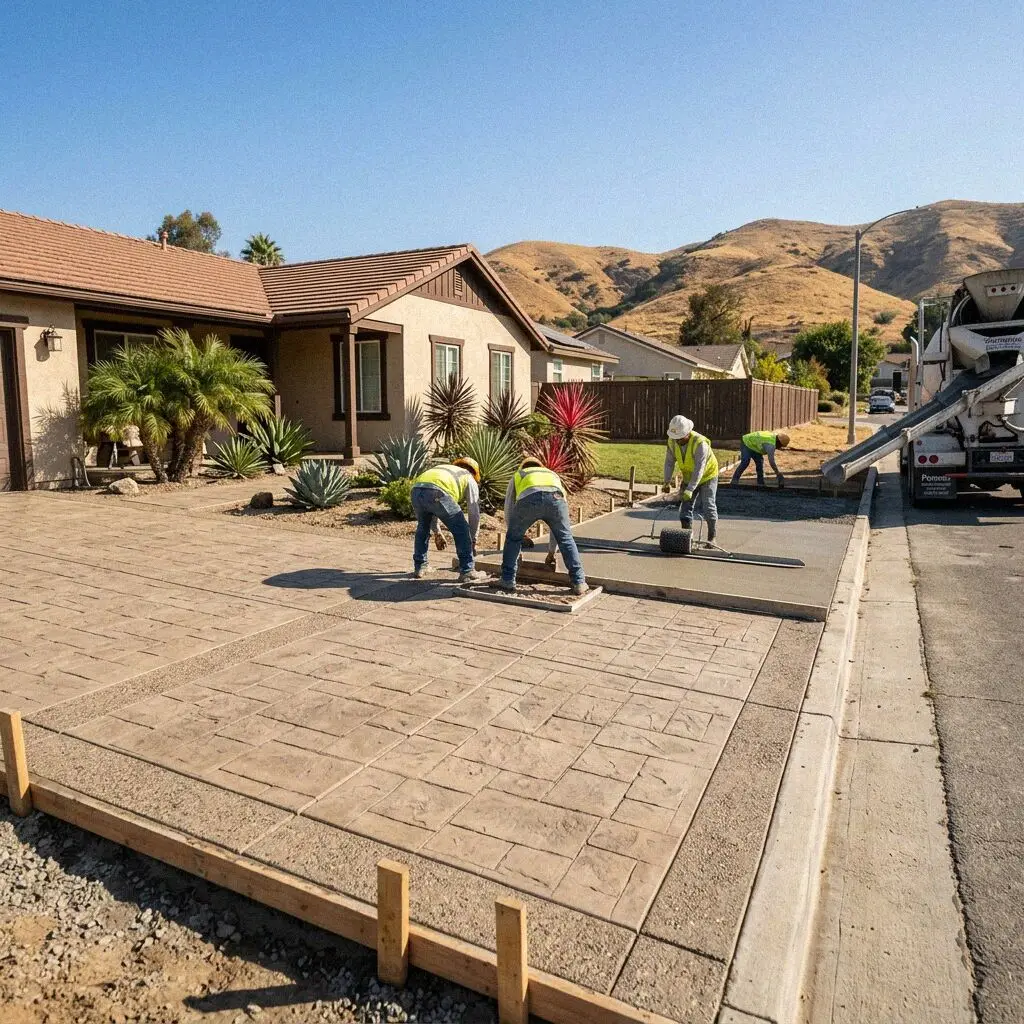
Freshly poured concrete driveway at a single-family home in Pomona

Concrete Driveway Building

Upland driveways must carry heavy vehicle loads across natural slopes dropping from the mountain base. We excavate 6 inches of uncompacted aggregate, pour 4 inches of reinforced concrete, and cut control joints every 10 feet to stop cracks along natural fault drainage paths.

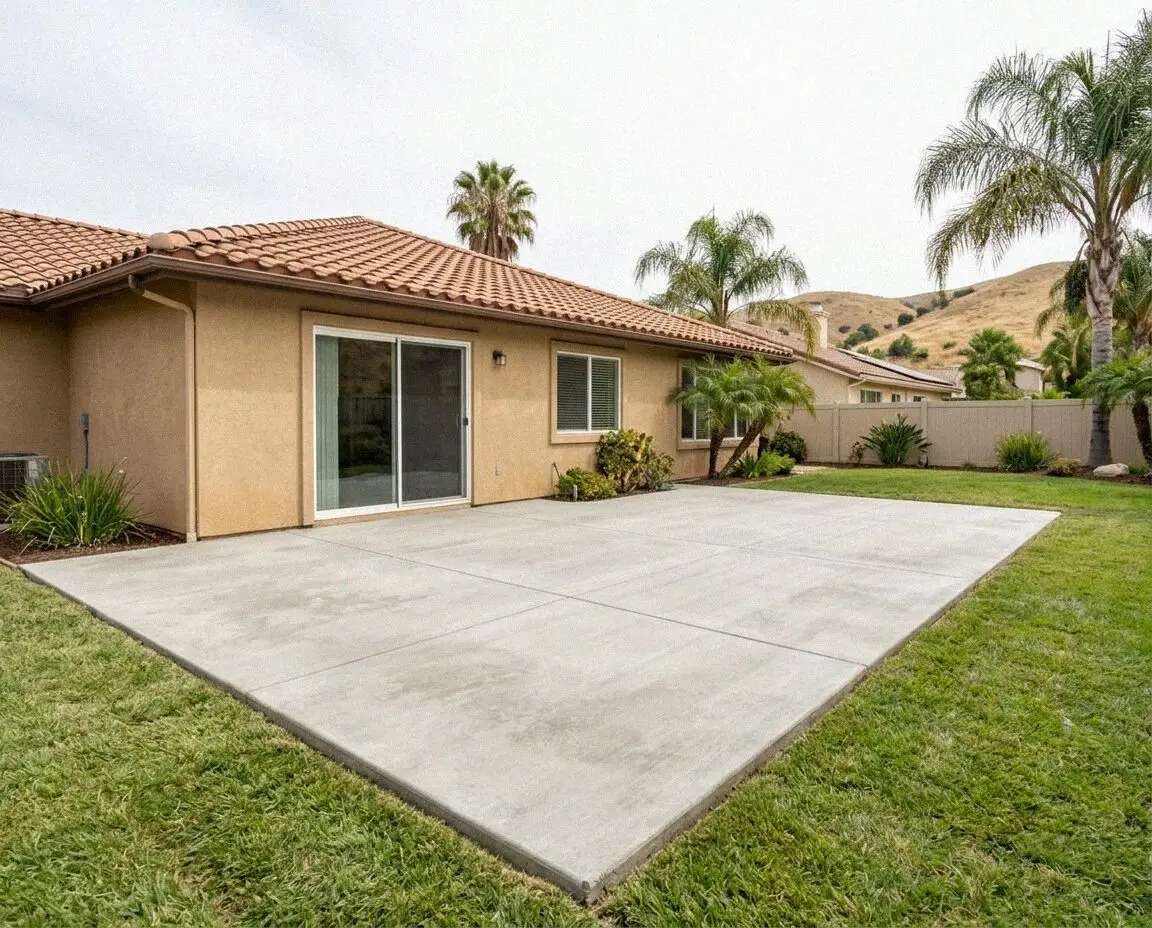
A newly finished brushed concrete patio behind a home in Pomona.

Concrete Patio Construction

Midcentury ranch homes built in 1958 north of Foothill Boulevard feature expansive backyards with degraded original slabs. We pour outdoor concrete patios at 4 inches of thickness with rebar reinforcement, connecting indoor living spaces to rear gardens with durable flatwork.

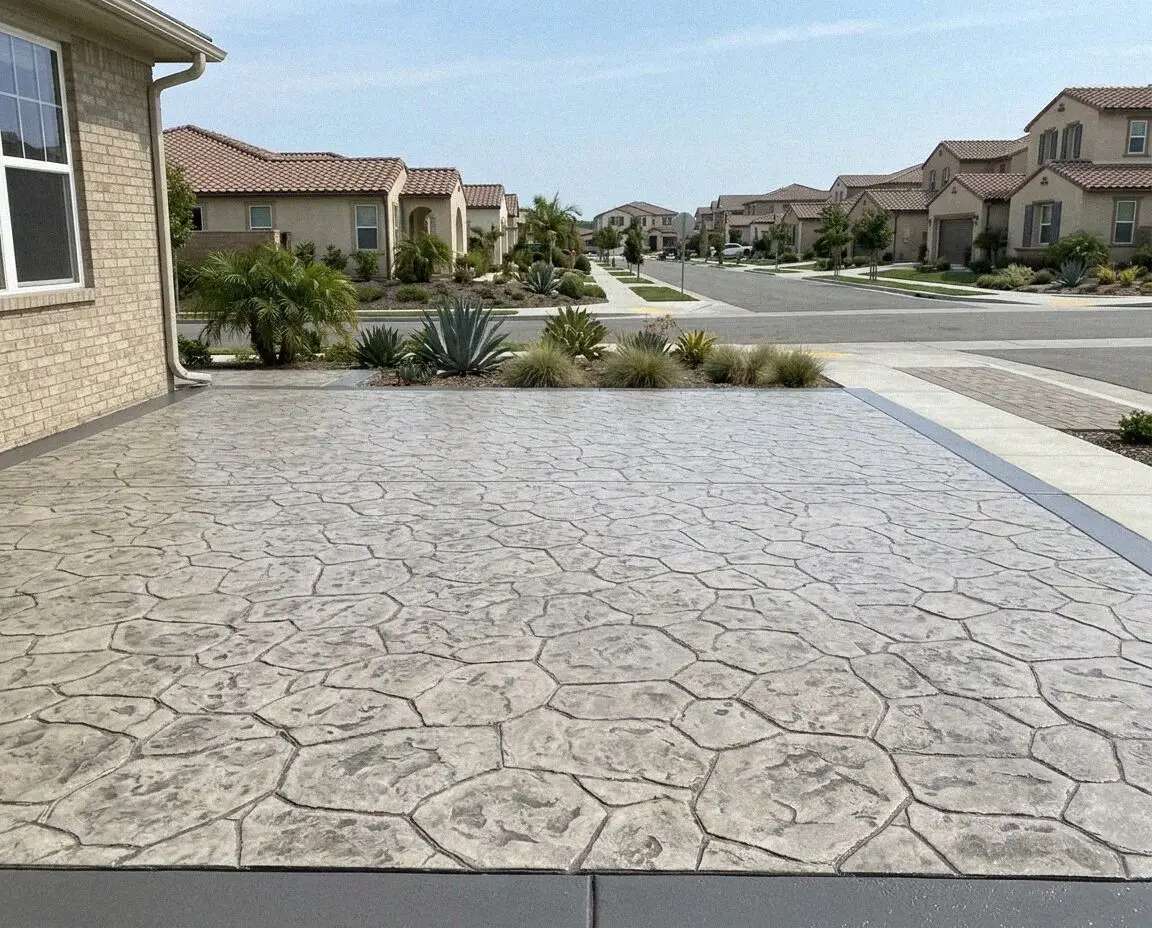
Ashlar slate stamped concrete backyard patio at a Pomona residence

Stamped Concrete Services

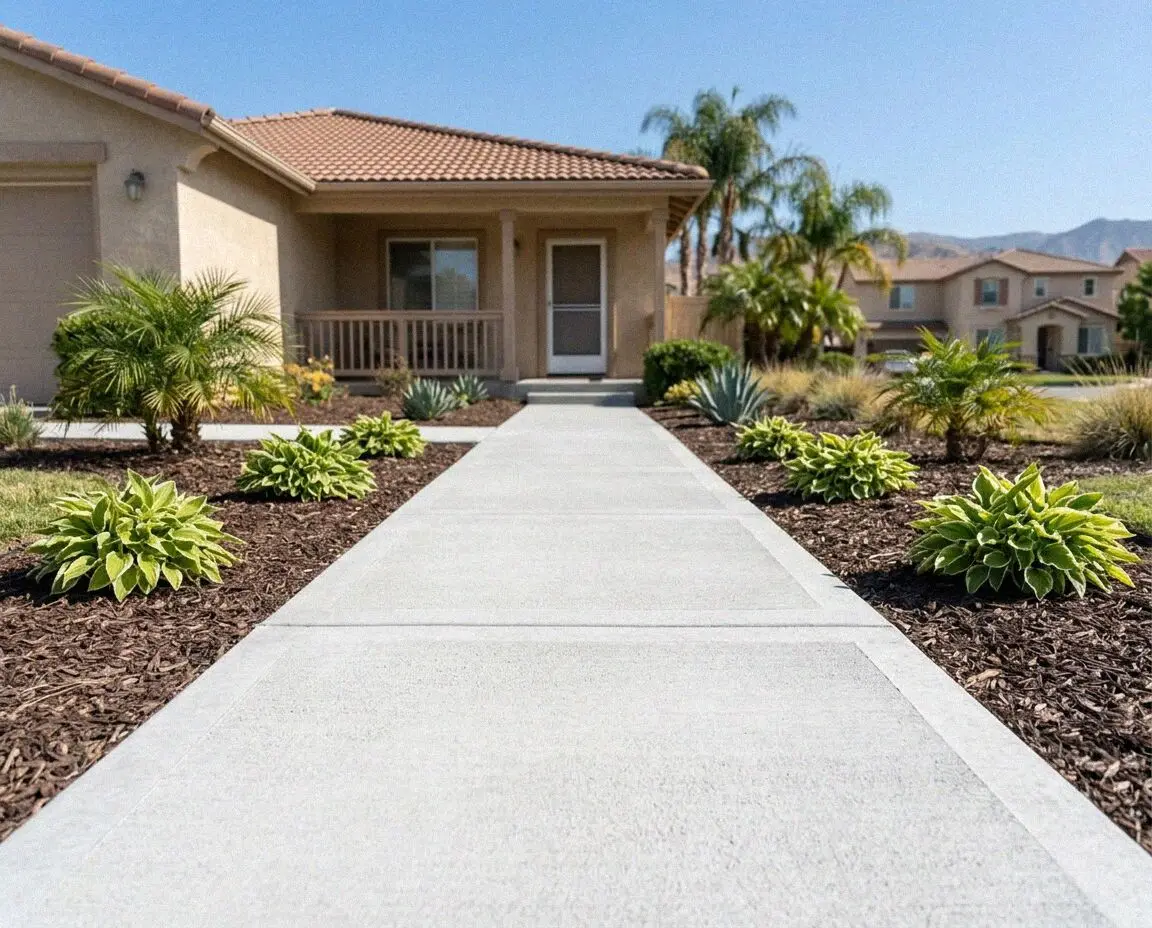
Granitic cobble washed down from the San Gabriel Mountains shifts under surface runoff during winter rains. For concrete walkways, we clear stony topsoil and place 4 inches of compacted crushed base before pouring, preventing uneven slab settlement along residential frontages.

Freshly poured concrete sidewalk along a residential Pomona frontage

Concrete Sidewalk Building

Dry Santa Ana winds gusting through San Antonio Canyon cause fresh concrete to lose moisture rapidly. When pouring concrete garage floors, we apply curing compound and pour 5 inches of concrete with synthetic fibers to prevent rapid shrinkage cracking during hot drying cycles.

Freshly finished garage floor concrete slab at a Pomona home

Garage Floor Concrete

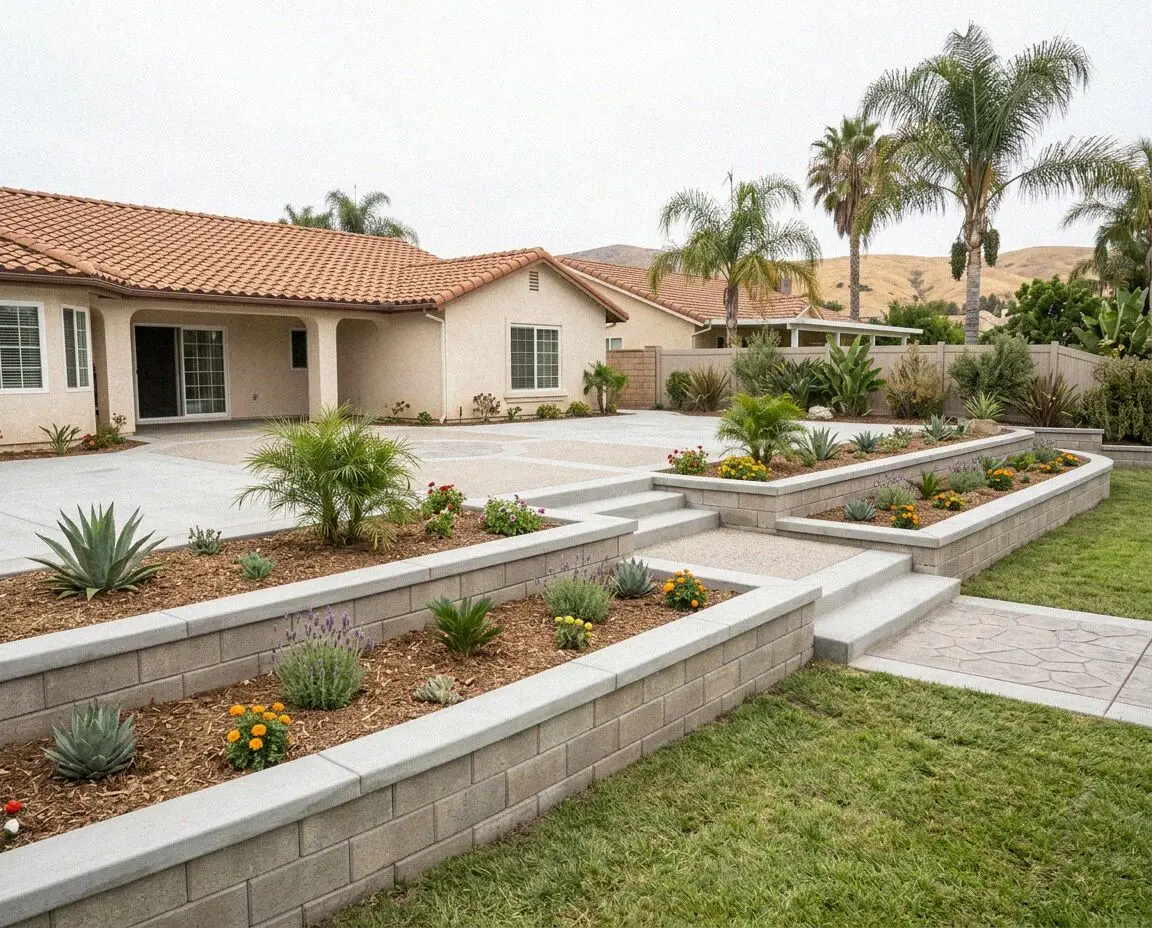
City of Upland building rules require engineered drainage and permits for retaining walls supporting foothill terracing. We build reinforced concrete retaining walls with continuous footings set 24 inches into native ground, preventing hillside washouts along steep lot borders.

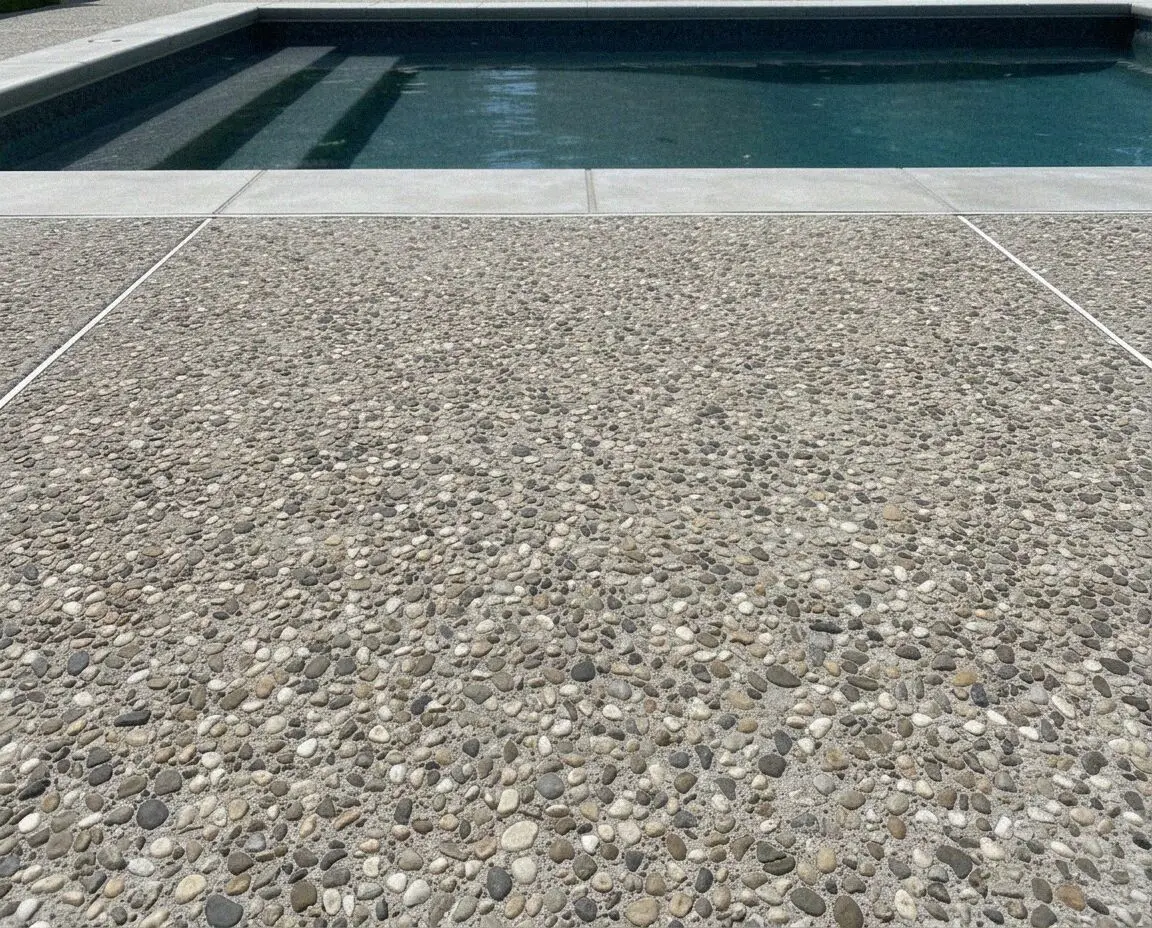
Finished stamped concrete patio beside a ranch home in Pomona

Decorative Concrete

Homeowners frequently request stamped concrete pool decks to match stone architecture along Euclid Avenue. We apply textured patterns and integral color over 4 inches of reinforced concrete, providing slip-resistant leisure areas that endure intense Inland Empire summers.

Poured concrete retaining wall on a terraced residential yard in Pomona

Concrete Retaining Walls

Retail strips and industrial yards along Arrow Highway experience constant heavy truck turning loads across their aprons. We pour commercial concrete flatwork at 6 inches of thickness with heavy wire mesh, preventing edge spalling and pavement punch-through under delivery axles.

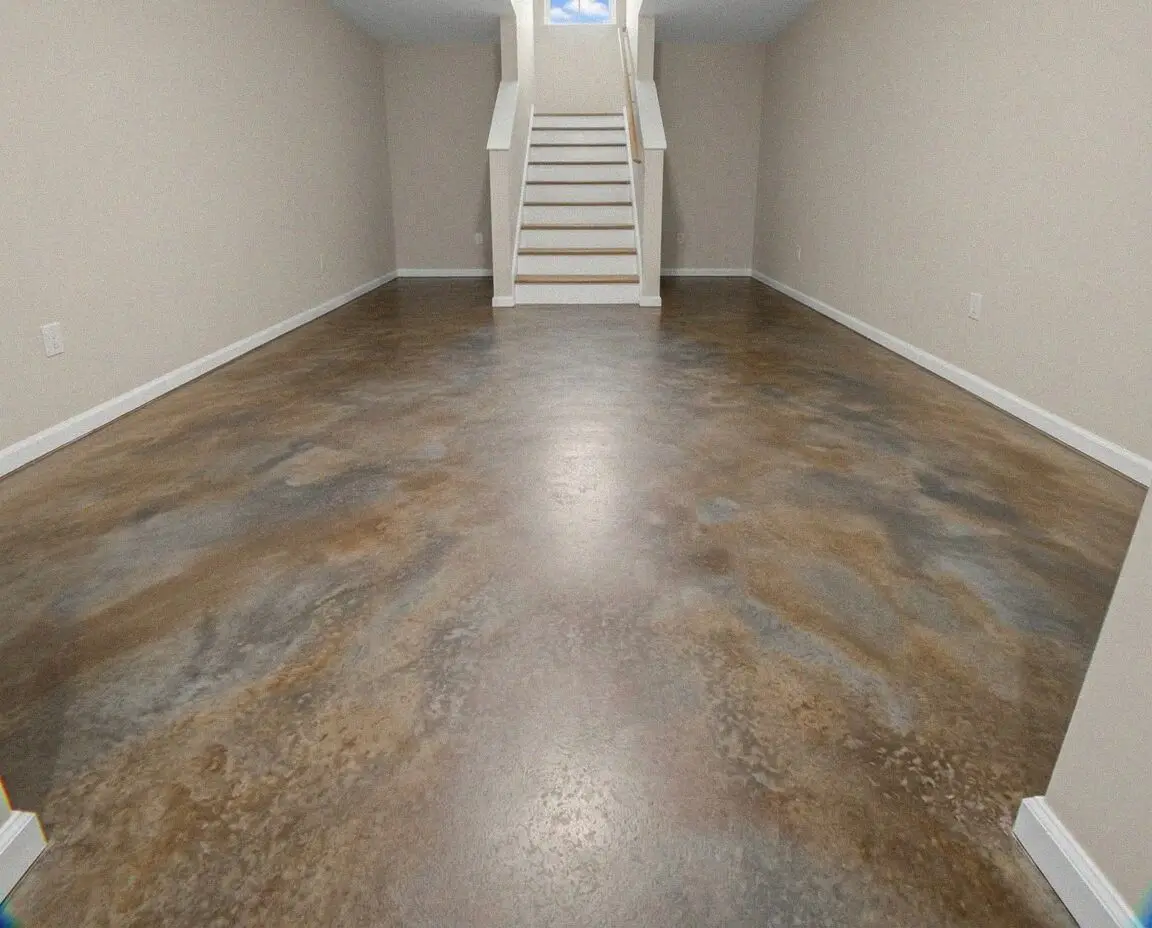
Smoothing a poured concrete interior floor inside a Pomona house

Concrete Floor Installation

Patching cracked slabs on Mountain Avenue with thin asphalt layers fails because subterranean cobble shifts during wet months. Full concrete demolition and replacement solves the base failure permanently, installing 4 inches of fresh concrete that outlasts temporary surface coatings.

Show All Concrete Services

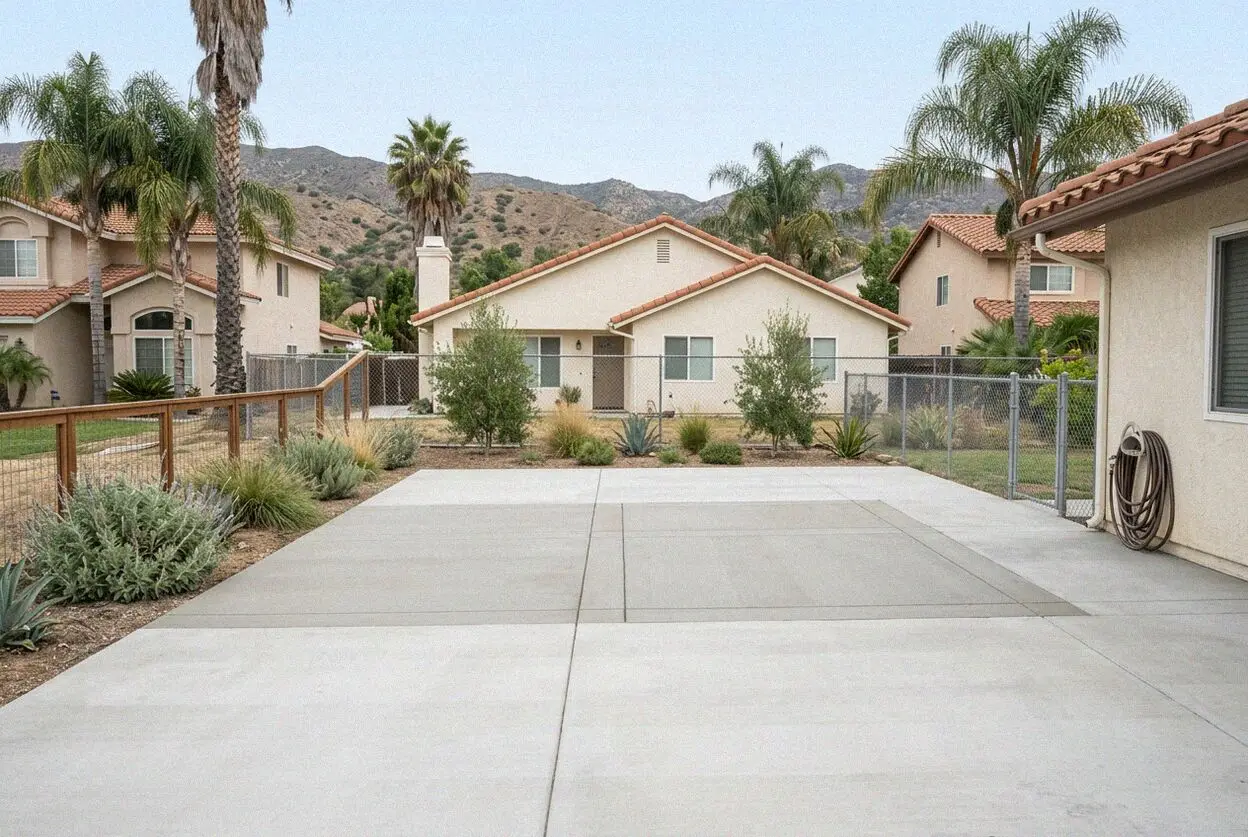
The Pomona Concrete Pro crew mid-pour at a home in the Pomona area

Alluvial Boulders Shape Every Upland Trench

With a population of 76,999 residents in San Bernardino County, Upland features a distinct transition from citrus grove homesteads to modern suburban streets. Trenching through neighborhoods near 14th Street or Euclid Avenue immediately reveals the legacy of mountain geology. Buried granitic stones ranging from fist sized cobbles to river boulders mean standard excavators must often stop so crews can clear obstructions by hand.

With owner-occupied homes at 55.6% across Upland, property owners invest heavily in long term structural improvements rather than quick aesthetic patches. Properties situated north of Foothill Boulevard face steeper slopes where gravity pulls water across driveways during sudden winter storms. Concrete flatwork must incorporate adequate slope gradients, typically falling one quarter inch per foot away from foundations, to prevent basement flooding.

The municipal territory spans 1,904 people per square mile, combining tightly spaced older parcels with hillside developments. When setting forms along street margins, contractors must coordinate with the City of Upland for any encroachment into public parkways or sidewalk easements. Proper edge transitions and clean utility cutouts ensure municipal compliance and prevent trip hazards along bustling neighborhood walkways.


Sequencing an Upland Concrete Pour

Every stage of construction addresses the rocky subgrade and municipal standards of Upland, ensuring a structured installation that finishes on schedule without structural compromises.

1

Site visit and survey

We inspect slopes across your yard, map buried cobble, and calculate depth needs. Every estimate is measured and written on site

2

Preparation first

Crews dig out 6 inches of rocky dirt, remove subsurface boulders, and pack 4 inches of crushed rock base with mechanical plates.

3

Permits and scheduling

We pull required permits from the Upland Building Division directly. Homeowners never have to visit the municipal counter themselves.

4

The work and after

Pours take 1 to 3 days on site. Foot traffic can resume after 24 hours, while vehicles require a full 7 days of surface curing.

Request Your Written Upland Estimate

We visit your property, evaluate slope grades, inspect subgrade cobble, and issue a fixed written quote before work begins. Reach out today to set up your consultation.

By submitting, you agree to our disclosure and consent terms, including being contacted by Pomona Concrete Pro.

Reviews

Verified Feedback from Upland Clients

Property owners throughout Upland rely on our crew for durable flatwork built to manage foothill slopes, rocky soil conditions, and demanding summer temperatures.

Google review

“Our house is inside the Lincoln Park district, so the drive and the front walk had to go past the preservation people before anyone could break anything out. Ganesha handled that paperwork, matched the scoring on the original walk and poured 430 square feet at 5 inches.”

Facebook review

“The garage sits at the back of the lot off the alley and the floor had split corner to corner, because the old slab was barely three inches with nothing under it. They took it out, laid a vapor barrier, poured 5 inches and sawed the joints before leaving. My tools stopped rusting.”

BBB review

“The back of our lot in Ganesha Hills falls away and the old block wall had started leaning into next door. They put the footings 24 inches down, packed rock and a drain pipe in behind the stem and ran it 38 feet across. Two wet winters on and it is still dead straight.”

Questions Upland Homeowners Ask

These answers clarify local permitting, foothill soil challenges, scheduling realities, and engineering practices for concrete installations completed throughout Upland.

(909) 326-7540
  • What factors drive concrete costs in Upland?

    Site elevation and ground composition decide the final estimate more than surface square footage. Foothill parcels north of 14th Street require substantial boulder extraction and hillside grading, which increases labor time. Properties with narrow side access between older citrus colony homes also require manual wheelbarrow transport rather than direct chute delivery from the mixing truck.

  • Do I need a permit from the city here?

    No permit is required by the City of Upland for standard backyard flatwork like patios or walkways. A municipal permit is required for structural retaining walls exceeding 4 feet in height, new foundations, and driveway approach alterations. We apply for all necessary permits directly with the city building division, while the homeowner handles public sidewalk encroachment bonds if working outside the lot line.

  • What makes concrete work last in Upland?

    Uncompacted rocky alluvial soils allow settling that snaps thin slabs under load. To prevent this failure mode, we excavate loose surface dirt, place 4 inches of compacted crushed base, and pour a minimum slab thickness of 4 inches reinforced with steel rebar. We also saw control joints at 10 foot intervals to guide natural contraction, ensuring that seasonal foothill runoff does not undermine the structure.

  • How does the housing stock in Upland affect the work?

    Prewar craftsman homes and citrus ranch houses near Old Town feature narrow lot setbacks that restrict heavy machinery access. Crews must break out old slabs with smaller breakers and haul rubble through narrow gates, making preparation the primary driver of project costs. Newer tracts built in north Upland offer wide street frontages that allow direct mixer access, resulting in lower site staging expenses.

  • How long does the work take in Upland?

    Most residential pours require 2 to 4 working days on site. Foot traffic is safe after 24 hours, while vehicular traffic must wait 7 days for proper slab hydration. Projects can take longer when permitting queues at the Upland Development Services department experience delays, during extreme summer heatwaves that force early morning pours, or when tight historic driveways require hand hauling of materials.

  • Is work in one part of Upland different from another?

    Homes in San Antonio Heights sit on steep, boulder strewn alluvial gradients that require deep excavation and sturdy retaining footings. Properties south of Arrow Highway occupy flatter land with finer sandy loam and standard tract layouts.

Concrete Services Beyond Upland Borders

We bring licensed CSLB C-8 craftsmanship across the Pomona Valley, applying the same disciplined base preparation and reinforced pouring techniques to neighboring cities sharing this rocky alluvial ground.

Show All Areas We Serve

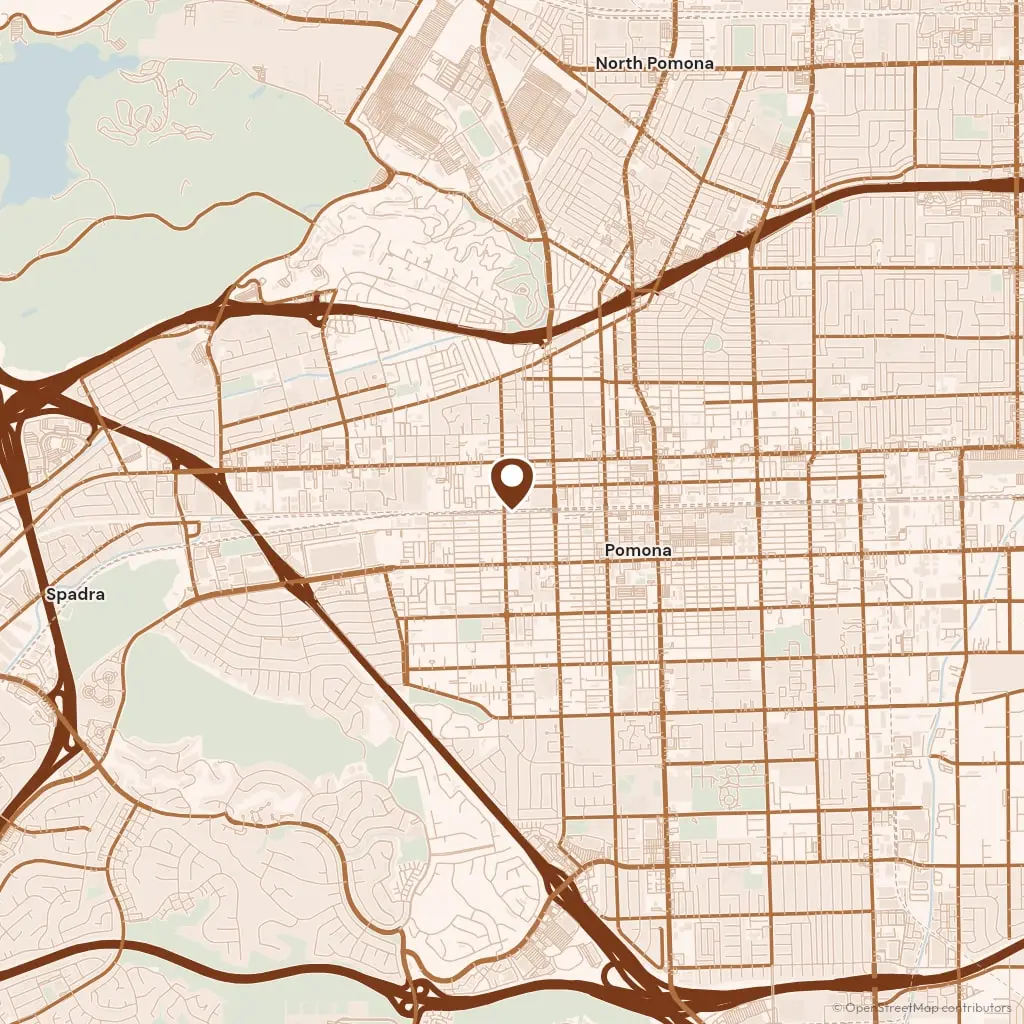
Map showing Pomona Concrete Pro in PomonaOpen the Pomona Office in Google Maps
Pomona Concrete Pro

Ready to Replace Concrete in Upland?

Contact Hector Zamora to schedule your property consultation. Our team responds within 1 business day to inspect your ground, measure grades, and prepare a written quote.